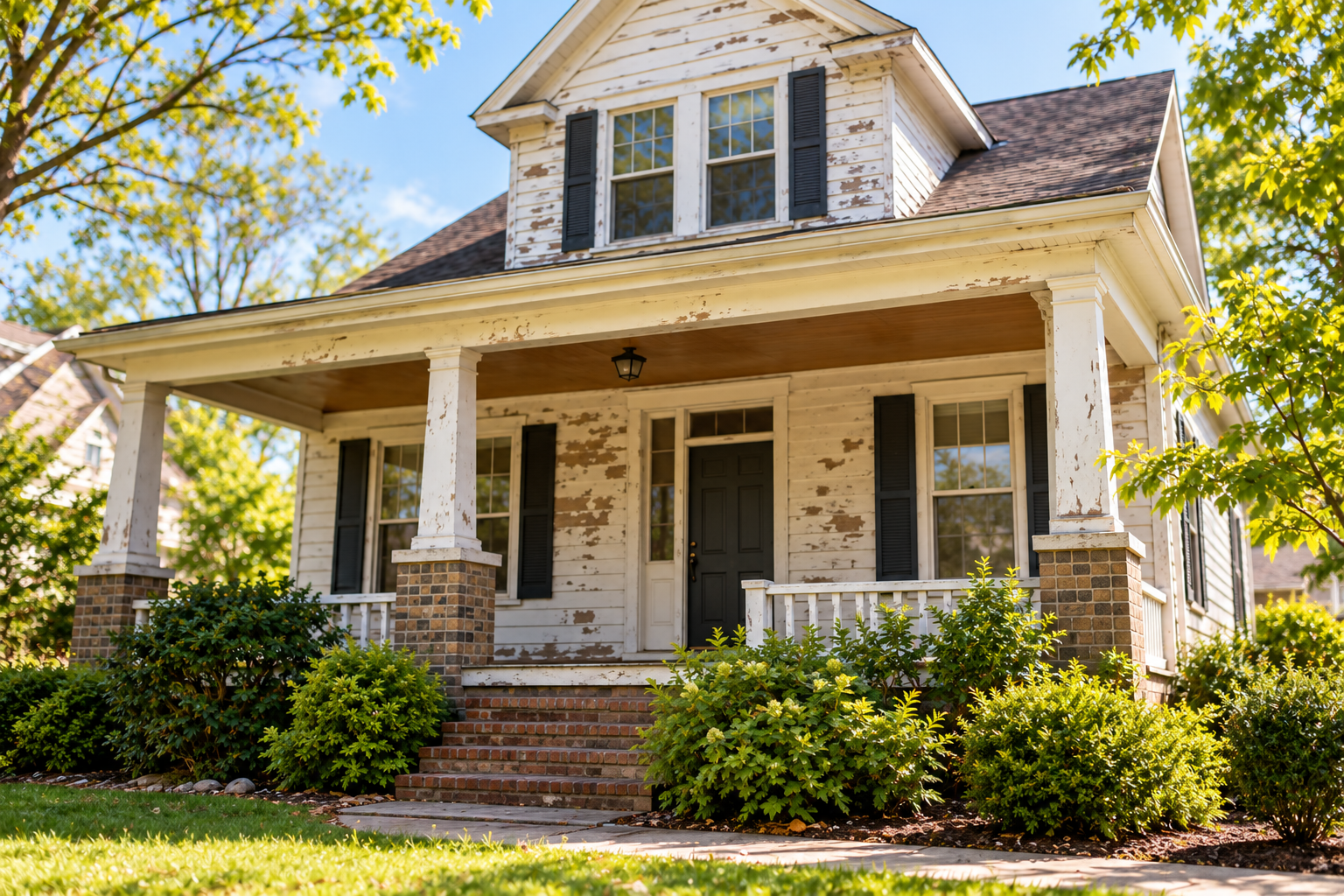
There’s something exciting about walking into a house that needs work and immediately seeing what it could be. Maybe you’re already mentally knocking down a wall, picturing a new kitchen, or imagining what you could do with that unfinished basement.
A fixer-upper can be a great way to get into the neighborhood you want, create a home that fits your family, or simply get more house for your budget. But before you fall in love with the potential, it’s important to understand what you’re actually buying.
Some problems are ugly but relatively straightforward to fix. Others can completely change the cost and scope of your renovation. If you’re shopping for a fixer-upper in Miami County, Montgomery County, or the surrounding Dayton area, here are a few things worth looking at before you buy.
Look Past What’s Ugly
Old cabinets, dated flooring, wallpaper, bad paint colors, and a bathroom that looks like it hasn’t been touched since 1985 can make a house feel like a huge project. But those aren’t necessarily reasons to walk away.
In fact, cosmetic problems may be exactly where the opportunity is.
Try to separate what you don’t like from what doesn’t work. An outdated kitchen can be remodeled. Old flooring can be replaced. A bathroom can be completely transformed.
Ask:
- If the finishes were different, would I like this room?
- Does the size of the space work for us?
- Am I bothered by how it looks, or by how it functions?
- What would we need to change immediately, and what could wait?
If you can see past someone else’s decorating choices, you may find a house with great bones underneath.
Pay Attention to the Layout
This is where things can get more complicated.
Maybe you want to open the kitchen into the living room. Maybe the primary bathroom is tiny and you want to borrow space from the bedroom next door. Maybe you’d love to turn two small rooms into one large family space.
Those ideas may absolutely be possible, but don’t assume every wall can simply come down.
Load-bearing walls, plumbing, electrical, HVAC, stairs, windows, and the way the home was originally constructed can all affect what can realistically be changed.
Before buying, think about how much of the existing layout you can live with. If your dream for the house depends on completely reworking the floor plan, it may be worth talking with a contractor before you make that dream part of your buying decision.
Don’t Ignore the Expensive Things You Can’t See
A dated kitchen is easy to spot. Old wiring hiding behind the drywall isn’t.
Your home inspection is incredibly important when buying any house, but especially a fixer-upper. Pay attention to the major systems and structural components that could take money away from the renovations you’re actually excited about.
That includes things like:
- Roof age and condition
- Electrical system
- Plumbing
- HVAC
- Foundation or structural concerns
- Signs of previous water intrusion
- Windows and exterior doors
- Insulation
None of these automatically mean you shouldn’t buy the house. They simply need to be part of the real budget.
If you buy expecting to spend your renovation money on a beautiful new kitchen and discover that the electrical, plumbing, and roof all need attention first, your plans can change pretty quickly.
Think About What the House Can’t Give You
This one is easy to overlook when you’re excited about a property.
Imagine you completed every renovation on your wish list. Would the house actually meet your needs?
You might be able to completely remodel the kitchen, but you’ll still have three bedrooms when your family needs four. You can finish the basement, but that won’t give you the garage you’ve always wanted. You may love the property, but the lot could make the addition you’re imagining difficult or impossible.
Before buying, ask yourself one important question:
If we fixed everything we don’t like about this house, would it become the home we actually need?
If the answer is yes, you may have found a great candidate for renovation.
If the answer is still no, think carefully before assuming construction can solve every problem.
Know When a Fixer-Upper Becomes a Major Renovation
There is a big difference between replacing cabinets and relocating an entire kitchen.
The same goes for swapping bathroom finishes versus moving plumbing, replacing flooring versus changing the floor plan, or finishing an existing room versus adding new square footage.
Before you buy, make two lists: 1. what you need to change and 2. what you’d like to change.
Then look at how many of those projects involve moving walls, plumbing, electrical, structural work, or adding square footage. If several do, you may be looking at a major renovation rather than a simple fixer-upper.
That doesn’t make it a bad house. You just want to know what you’re getting into before you own it.
Consider Talking to a Contractor Before You Buy
Your home inspector and your contractor have two different jobs.
An inspector can help identify issues with the property and its major systems. If you’re seriously considering significant renovations, an experienced general contractor can help you think through what you want to change and whether those ideas are realistic.
If your decision to buy depends on being able to open a wall, add a bathroom, build an addition, renovate several rooms, or make another substantial change, getting some construction perspective before closing can be incredibly valuable.
You don’t necessarily need every finish selected or a full renovation plan. Sometimes you simply need someone with experience to look at the house and say, “Yes, that’s realistic,” or, “That’s going to be a much bigger project than you think.”
Don’t Be Afraid of a House That Needs Work
A fixer-upper isn’t necessarily something to avoid. For the right homeowner, it can be a great opportunity.
You may get into a neighborhood you couldn’t otherwise afford, avoid paying a premium for someone else’s renovations, and put your money toward creating spaces that actually work for your family.
Ugly cabinets can be replaced. Bathrooms can be remodeled. Walls can sometimes move. Additions can be built. What matters is knowing the difference between a home with potential and a project that’s bigger than you want to take on.
If you’re considering buying a fixer-upper in Miami County, Montgomery County, or the greater Dayton area and already have a list of things you’d want to change, Hayslett Construction can help you understand what’s possible.